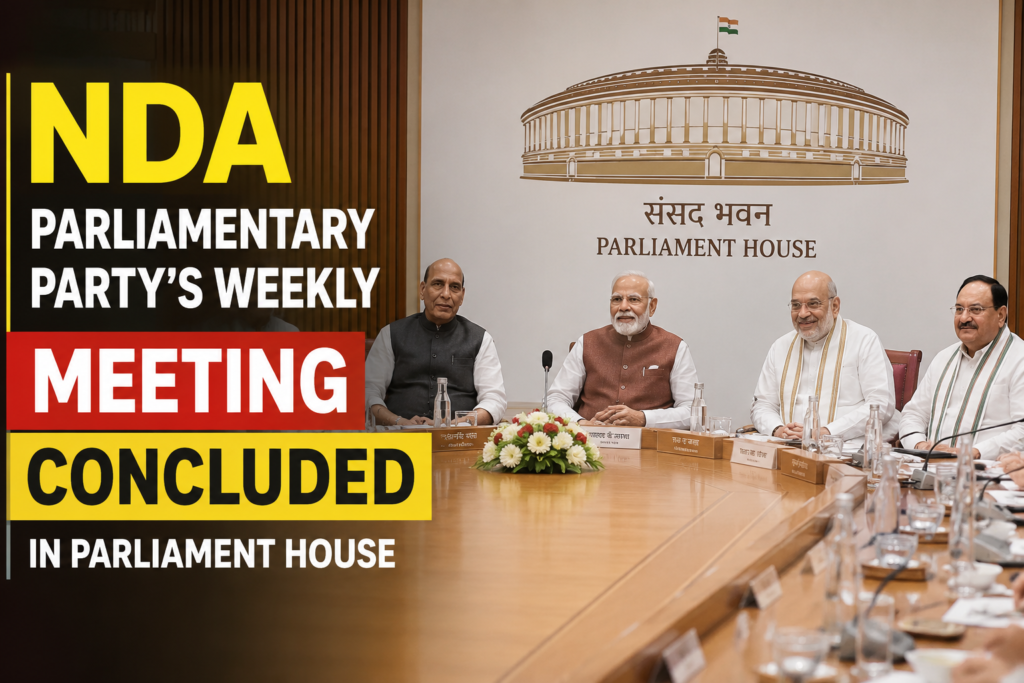
The NDA Parliamentary Party’s weekly meeting concluded in Parliament House, bringing together senior leaders, Union Ministers, and Members of Parliament from the National Democratic Alliance (NDA). The meeting focused on the ongoing Parliament session, legislative priorities, public welfare initiatives, and coordination among alliance partners. Such weekly meetings play an important role in shaping the government’s strategy for parliamentary proceedings and ensuring smooth coordination on key national issues.
NDA Parliamentary Party Weekly Meeting: Key Highlights
| Particulars | Details |
|---|---|
| Event | NDA Parliamentary Party Weekly Meeting |
| Venue | Parliament House, New Delhi |
| Participants | NDA MPs, Union Ministers, Senior Alliance Leaders |
| Main Focus | Parliament strategy, legislative agenda, coordination |
| Chaired By | Senior NDA Leadership |
| Discussion Topics | Government policies, Bills, Parliament functioning |
| Objective | Strengthen coordination among NDA partners |
| Session | Ongoing Parliament Session |
What Happened During the NDA Parliamentary Party Meeting?
The weekly NDA Parliamentary Party meeting was held at Parliament House ahead of the day’s parliamentary proceedings. Leaders discussed the government’s legislative priorities, debated important issues likely to arise during the session, and reviewed the progress of ongoing government initiatives. The meeting also served as a platform for MPs to share feedback from their constituencies and discuss ways to effectively present the government’s achievements in Parliament.
Why Are Weekly NDA Parliamentary Party Meetings Important?
The weekly parliamentary party meetings are an important part of the NDA government’s functioning. These meetings help alliance leaders and MPs remain informed about the government’s legislative plans, coordinate responses on national issues, and maintain unity during parliamentary debates. They also provide an opportunity to discuss strategies for handling opposition questions and ensuring smooth passage of important Bills in both Houses of Parliament.
Key Issues Discussed During the Meeting
Parliament Session Strategy
One of the major topics of discussion was the strategy for the ongoing Parliament session. Leaders reviewed the schedule of upcoming debates, legislative business, and important government Bills expected to be taken up in both the Lok Sabha and the Rajya Sabha. Members were encouraged to actively participate in discussions while presenting the government’s position effectively.
Government Welfare Schemes
The meeting also included discussions on the progress of several government welfare schemes and developmental initiatives. MPs were encouraged to highlight the achievements of flagship programmes and communicate their impact on citizens in their respective constituencies.
Coordination Among NDA Partners
Another significant focus of the meeting was maintaining strong coordination among NDA alliance partners. Party leaders emphasized the importance of presenting a united stand on national issues and ensuring smooth cooperation during parliamentary proceedings.
Public Outreach and Communication
Leaders also discussed improving communication with the public regarding government decisions and policies. MPs were advised to continue engaging with people in their constituencies and provide accurate information about ongoing development projects and welfare initiatives.
Role of NDA Parliamentary Party Meetings
The NDA Parliamentary Party meetings are conducted regularly whenever Parliament is in session. These meetings provide a platform where Members of Parliament receive updates about legislative priorities, discuss national developments, and prepare for important parliamentary debates. Such meetings also strengthen coordination between ministers and MPs, helping the government function more effectively during Parliament sessions.
Parliament House Remains the Centre of Political Discussions
With Parliament in session, Parliament House continues to be the centre of major political discussions and legislative activities. Weekly meetings of parliamentary parties allow leaders to review upcoming business, assess political developments, and ensure that alliance members remain informed about policy priorities before participating in debates inside the House.
Impact of the Meeting on the Current Parliament Session
The conclusion of the NDA Parliamentary Party’s weekly meeting is expected to strengthen coordination among alliance members during the remaining days of the ongoing Parliament session. Discussions held during the meeting are likely to influence the government’s approach to legislative business, policy discussions, and parliamentary debates. Better coordination among MPs can help ensure smoother functioning of Parliament and effective presentation of the government’s agenda.
What Happens After the Weekly Meeting?
Following the meeting, Members of Parliament participate in the day’s proceedings with updated information regarding the government’s legislative priorities. Ministers and MPs continue discussions on Bills, policy matters, and questions scheduled for Parliament. Decisions and strategies finalized during the meeting often guide the alliance’s approach throughout the parliamentary session.
Important Links
| Resource | Link |
|---|---|
| Parliament of India | https://sansad.in |
| Lok Sabha | https://loksabha.nic.in |
| Rajya Sabha | https://rajyasabha.nic.in |
| Press Information Bureau | https://pib.gov.in |
| MyGov India | https://www.mygov.in |
FAQs
Q1. Where was the NDA Parliamentary Party’s weekly meeting held?
The NDA Parliamentary Party’s weekly meeting was held at Parliament House in New Delhi.
Q2. What was discussed during the meeting?
The meeting focused on Parliament strategy, legislative priorities, government welfare schemes, policy discussions, and coordination among NDA alliance partners.
Q3. Why are weekly parliamentary party meetings conducted?
These meetings help coordinate MPs, discuss legislative business, prepare for parliamentary debates, and strengthen communication among alliance members.