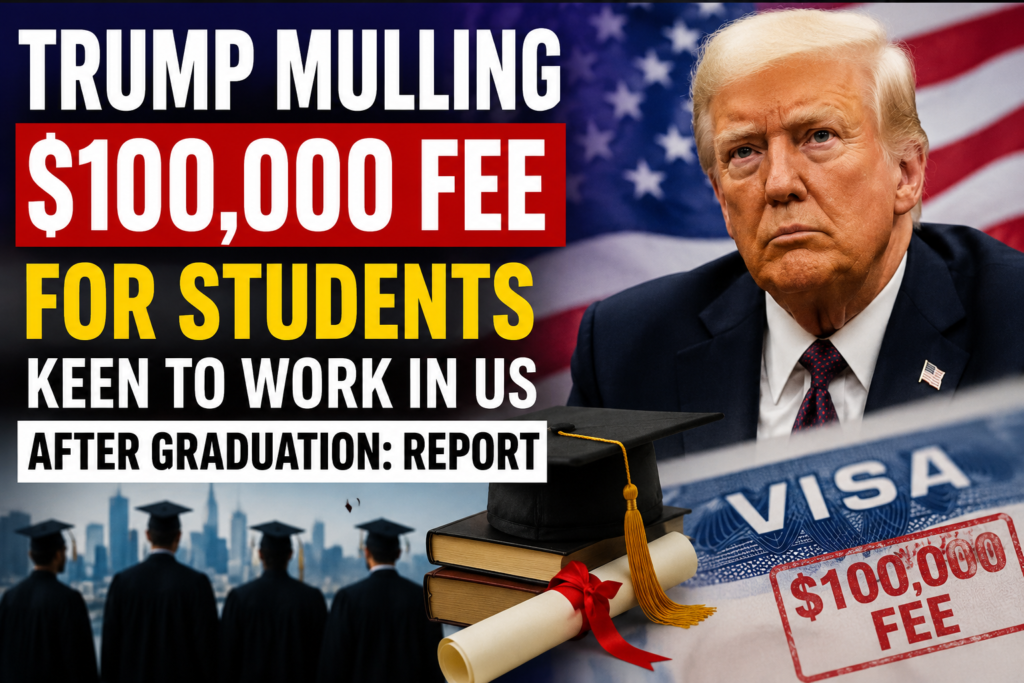
A fresh report suggesting that former US President Donald Trump is considering a proposal to impose a $100,000 fee on international students who wish to work in the United States after graduation has sparked widespread debate among students, universities, employers, and immigration experts. Although no official policy has been announced, the reported proposal has already generated significant attention because of its potential impact on thousands of international students planning to study and build careers in America. The United States remains one of the world’s top destinations for higher education, attracting students from India, China, South Korea, and many other countries. Any major change in post-study work opportunities could reshape global education trends and influence students’ decisions about where to pursue higher education. If implemented, such a fee could significantly increase the financial burden on graduates hoping to remain in the US workforce after completing their studies.
Overview of the Report
| Particular | Details |
|---|---|
| Topic | Proposed $100,000 fee for international graduates |
| Reported By | Various media reports |
| Country | United States |
| Proposed By | Donald Trump (as per reports) |
| Affected Group | International students seeking employment after graduation |
| Current Status | Proposal reportedly under consideration |
| Official Policy | Not announced |
| Likely Impact | International students, employers, universities |
What Is the Report About?
According to recent reports, the proposal under discussion would require international students to pay a substantial fee if they wish to continue working in the United States after completing their education. The reported amount of $100,000 has attracted immediate global attention because it would represent one of the most significant financial barriers ever suggested for foreign graduates entering the American workforce. While details remain limited and no official legislation has been introduced, the discussion has fueled speculation about future US immigration and employment policies, particularly if stricter immigration measures become part of a broader political agenda.
Why Is This Proposal Being Discussed?
Supporters of stricter immigration policies argue that employment opportunities should primarily benefit American citizens and permanent residents before foreign graduates. They believe higher financial requirements could reduce competition in the labor market while generating government revenue. Others suggest such proposals are intended to encourage companies to prioritize hiring domestic workers. Critics, however, argue that international graduates contribute significantly to innovation, scientific research, technology, healthcare, and entrepreneurship, making them an important part of the US economy.
Impact on International Students
International students invest substantial amounts in tuition fees, accommodation, insurance, travel, and living expenses while studying in the United States. Adding a potential $100,000 employment-related fee after graduation would dramatically increase the overall cost of obtaining a US education. Many students already finance their education through family savings or education loans, expecting to recover these investments through employment after graduation. A significant additional fee could discourage students from remaining in the US or even choosing American universities in the first place.
Indian Students Could Be Among the Most Affected
India has consistently ranked among the largest sources of international students in the United States, particularly in STEM fields such as engineering, computer science, business, and data analytics. Thousands of Indian graduates rely on Optional Practical Training (OPT) and employer-sponsored work visas to gain professional experience after completing their degrees. If such a fee were introduced, many Indian students could reconsider studying in the United States, instead exploring alternatives such as Canada, Australia, Germany, the United Kingdom, or Singapore, where post-study work pathways may be comparatively more affordable.
Effect on US Universities
American universities benefit enormously from international student enrollment. Foreign students contribute billions of dollars annually through tuition fees and living expenses while also enhancing campus diversity and academic excellence. If prospective students perceive post-graduation employment opportunities as becoming financially inaccessible, universities could experience lower international enrollment. Reduced enrollment would affect institutional revenues, research programs, campus diversity, and partnerships with global industries.
Challenges for Employers
Many US technology companies, healthcare organizations, engineering firms, and research institutions recruit highly skilled international graduates to address talent shortages. If employers face a shrinking pool of international candidates due to increased financial barriers, businesses could experience recruitment challenges in specialized fields. Companies might also shift hiring strategies or expand overseas operations to retain global talent.
Possible Economic Consequences
International students contribute significantly to the US economy through tuition, housing, transportation, healthcare, food, entertainment, and local spending. After graduation, many become taxpayers and skilled professionals contributing to innovation and productivity. If fewer international graduates remain in the country, the US could lose highly qualified professionals in sectors already experiencing workforce shortages. Economists often note that international graduates frequently establish startups, generate patents, and create employment opportunities, making them valuable contributors to long-term economic growth.
Could This Affect Student Visa Applications?
Although the reported proposal focuses on employment after graduation rather than student admissions, prospective students may evaluate the total financial implications before choosing the United States as their study destination. Increased uncertainty regarding future work opportunities could influence international application numbers, particularly among students comparing multiple countries offering post-study employment pathways. Universities and education consultants are likely to monitor any official developments closely before advising future applicants.
Comparison With Other Study Destinations
Countries such as Canada, Australia, the United Kingdom, Ireland, Germany, and New Zealand have actively promoted post-study work opportunities to attract international students. Many governments recognize skilled graduates as valuable contributors to economic development and demographic growth. If the United States adopts policies perceived as significantly more restrictive or financially demanding, competing destinations could experience increased international student interest, especially among STEM graduates seeking long-term career opportunities.
What Immigration Experts Are Saying
Immigration policy specialists emphasize that reports alone should not be interpreted as confirmed government policy. Experts recommend waiting for official announcements before drawing conclusions about future immigration rules. They also note that proposed policies often undergo legislative review, legal scrutiny, and administrative revisions before implementation. Universities, employers, and international students should therefore continue monitoring official government communications rather than relying solely on speculative reports.
Reactions Across Social Media
The reported proposal has generated mixed reactions online. Some social media users argue that countries have the sovereign right to determine immigration policies that prioritize domestic employment. Others believe such a substantial fee would discourage talented students from choosing American universities and could weaken the country’s position as a global education leader. Education organizations and student communities have also expressed concern regarding affordability and equal access to career opportunities after graduation.
What Current Students Should Do
Students currently enrolled in US universities should avoid making decisions based solely on media reports. Since no official policy has been announced, existing immigration and employment rules continue to apply unless formally changed by the relevant authorities. Students are advised to stay informed through official government sources, university international student offices, and qualified immigration professionals before altering academic or career plans. Maintaining valid visa status, following employment regulations, and preparing alternative career pathways remain sensible strategies regardless of future policy developments.
Will the Proposal Become Law?
At present, there is no confirmation that the reported proposal will become official policy. Any significant immigration-related measure would generally require formal policy development and could face political, legal, and administrative review before taking effect. Public debate, stakeholder feedback, and institutional responses could also influence the final outcome. Therefore, students should treat current reports as part of an ongoing policy discussion rather than as confirmed regulations.
How Students Can Prepare
International students planning to study abroad should evaluate education costs, scholarship opportunities, visa policies, employment prospects, and long-term immigration pathways before selecting a destination. Diversifying university applications across multiple countries can reduce uncertainty. Students should also strengthen academic performance, build relevant professional skills, gain internship experience, and remain informed about changing immigration policies that may affect future employment opportunities.
Future Outlook
The discussion surrounding a potential $100,000 employment fee highlights the broader debate over immigration, workforce priorities, and international education in the United States. Regardless of whether the proposal advances, the conversation demonstrates how immigration policy can significantly influence global student mobility. Universities, employers, governments, and students worldwide will continue monitoring developments closely as they assess the future of international education and skilled migration.
FAQs
1. Has the US officially introduced a $100,000 fee for international students?
No. As of now, reports describe it as a proposal under consideration, and no official policy has been announced.
2. Who could be affected if such a policy is implemented?
International students who wish to remain in the United States for employment after graduation could potentially be affected.
3. Would current students have to pay immediately?
There is no confirmed policy, so no such fee currently applies.
4. Could this impact Indian students?
Yes. Indian students represent one of the largest groups of international students in the US and could be significantly affected if such a policy were introduced.
5. Should students change their study plans now?
Students should wait for official government announcements and consult their universities or qualified immigration advisors before making major decisions.